DIY Strawberry Gutter Planters in 4 Easy Steps

0Top

The hubs and I tackled several projects over the weekend thanks to some glorious weather.  I’ll be sharing them all in due time, but here’s one of the ones I’m most excited about – our new Gutter Strawberry Planters!

The install was pretty simple, just 4 easy steps:
1.  Install boards across the space to hang the gutters from.

1Board

2.  Hang the gutters from the boards.

2Gutters

3.  Add end caps to each side of the open gutters.

3EndCaps

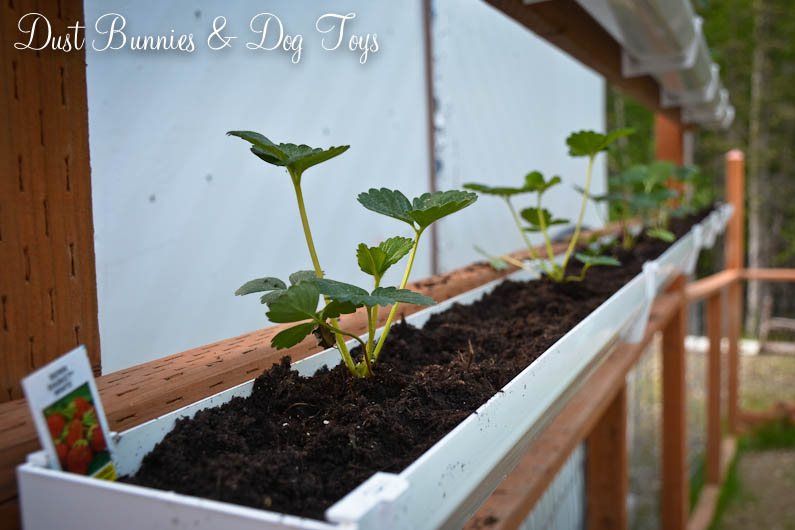
4.  Fill with dirt and strawberry plants!

4Plant

It took longer to find the materials at the home store than it did to install and finish this project!  The hubs may drill holes in the bottoms of the gutters to allow for drainage, but we’ll see how it goes for a few days before he finalizes that thought.

5Done

I love that they are high enough to be safe from our berry picking dogs and because they are behind the shed they are protected from the moose.  Plus this spot gets full sun for a large chunk of the day which is what makes strawberries sweet.  Hopefully the plants like their new home and start producing sweet success soon!

Save

Getting the Deck Ready for Summer

1

The temperatures are getting warmer and the sun is out longer which means it’s time to get the deck ready for summer!  I switched things up in the yard this year and put the sectional seating elsewhere so we could have a dining table on the deck.  Having one here makes more sense because the grill is nearby and the space is just off the sliding door to the main area of the house where the kitchen is.

I picked up this great table and chairs set on the local buy/sell page for just $100.  I love that the metal design is sturdy and won’t hold water so it should be ready to enjoy all the time.  I originally planned to add cushions to the chairs, but they are surprisingly very comfortable so I just used the throw pillows I already had instead.

The hubs dug out the umbrella and we placed it with the table for extra stability.  It took a tumble off the deck at the end of the season last year which broke the arm the hubs had repaired after we bought it at Goodwill.  This time he used metal tubing and painted it to match so it blends in quite well.

2

You really have to look closely to spot which arm is the one that’s been repaired, so I’d say he did an excellent job!  As an extra precaution we keep the umbrella down when we’re not using it, just in case the winds pick up when we’re not around.

3

Before we got everything set up we also pressure washed the deck (ignore the fact that it’s still sitting off to the side there.) so we had a clean slate to start with.  We’ll be painting the deck at some point this summer since it’s starting to show wear and needs a refresher, but a good wash works for now.  I’ll be adding plants to the various planters you see in the far corner this weekend and tilling the area around the deck to add landscaping there.  Check back next week to see it all come together! 🙂

Vintage DIY Magnets

magnetsdone

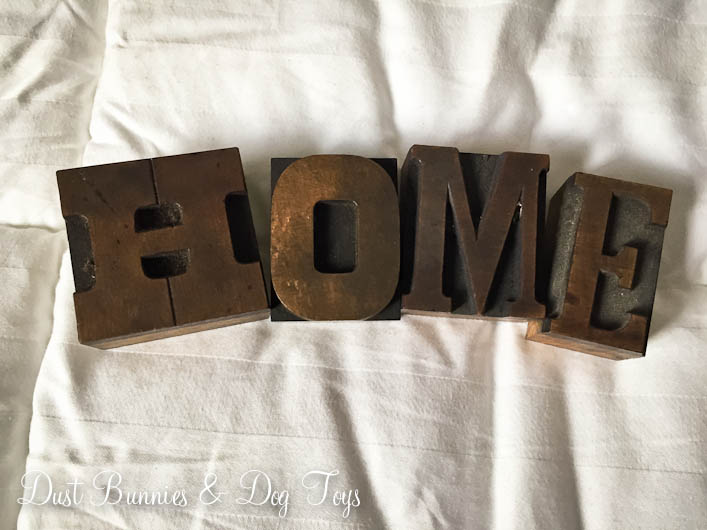
Today I wanted to share a quick DIY project I did with some of my Vintage Market finds.  Remember these fun antique letter blocks I got from Alaska Picker?  They were the perfect size to work as magnets on our chalkboard portion of the new command center.

Home

The backs were solid blocks of wood so there was a perfect surface to attach magnets.

magnets1

I picked up a pack of strong magnets at Michaels.  Other shoppers probably thought I was a nut-job as I tested several packs on various metal items around the store before deciding which option had the best grip.  But I a gal’s gotta do what a gal’s gotta do to make sure her project has staying power. 🙂

magnets

I was pretty sure the magnets were strong enough that I could use one per block, but since the pack came with 8 I decided to double them up on each just for good measure.  A little hot glue and we were in business.  It seriously took longer to wait for the glue gun to heat up than it did to glue the magnets down.

magnets2

One of the blocks apparently had some paper backing still attached where I added the magnet so it came off, but I cleaned both up and reapplied it without issue.

magnets3

And here they are on the chalkboard.  They do blend in a bit with the colors but that’s ok because they are the perfect size for the space.  Once they were up I noticed that having magnets on each corner kept the blocks level rather than having one in the center where the block might get bumped and loose grip, so I’m glad I decided to go that route.

magnetsdone
So what do you think of my new/old magnets? I’d love to see how others have used vintage letter blocks in their décor, so leave me a comment with a photo if you have!

A DIY Command Center

Full

Containing paper clutter is a constant battle in our home, just as I’m sure many can relate.  Because we enter the house from the garage through the laundry room most of the stuff that comes home ends up dumped on the dining room table or kitchen counters so I figured that was a good place to start.  I decided to create a command center in this little corner where we could write notes, stash important papers and organize the hub’s stuff.

f

I started with a small wooden organizer where the hubs can stash his wallet, receipts and notes.  I also found him a small jar with a lid for loose change.  That worked fairly well, but he often had full size papers that he needed handy so I decided to add a wire rack we picked up during one of our trips to Portland.  It had been in the laundry room for a while but never got used there and came down when I did my DIY Ballard Knockoff Décor for that space, so I’m glad it’s found a useful home here.  I used two clear hooks with removable adhesive tape to hang it just under the countertop.  It fits the small nook of space perfectly.

a

Originally I wanted to paint the side of the top cabinet to create a chalkboard but the hubs nixed that idea noting that if I changed my mind later removing the paint would damage the cabinet.  What?!  I never change my mind! Well ok.  He might have a point there. 🙂  So I came up with a better idea.  I’d paint a piece of sheet metal and install that on the side of the cabinet so it was both chalkboard and a magnet board!  Of course they didn’t sell a piece that was just the right size so the hubs cut one down for me.

b

A couple thin coats of chalkboard paint and it was looking pretty good.  The hardest part was waiting for it to dry in between coats.

c

Next I seasoned the chalkboard by rubbing a piece of chalk over the entire surface and then wiping it down.  This helps prevent things from “staying” on the surface after you wipe them down.

d

Since the hubs wanted the piece to be removable I attached it with the same removable adhesive strips I’d used on the hooks for the wire rack.  IF I every change my mind I can start at the bottom and work my way up pulling the tabs to release the adhesive.

e

I stuck it up on the side of the cabinet against the trim on the front and top of the cabinet so the edges weren’t exposed.  And as you can see, it works great as a magnetic board too holding our early bird tickets for Junk Bonanza outside Portland in October!

g

Things were looking pretty good at this point but I wanted to address the uneven edge of the metal along the wall.  The hubs did a great job cutting the sheet metal, but the tool he used had to take a 1/4″ off at a time so he wasn’t able to match the size exactly.  He was pretty frustrated that it wasn’t perfect, so I wanted to find a way to make it work.

gap

I tried a few pieces of trim we had on hand but most were too big or bulky.  I picked up a square dowel at Lowes but that was too narrow and too thick, so I returned that.  A few days later I was at Michaels and figured I’d look at what they had.  I’m glad I did because I found a piece of balsa wood that was the right thickness and width for what we needed. At less than $2 plus a coupon it was the perfect solution. I gave it a couple coats of stain to match the cabinet color.  It fit so well that it actually stayed up without any adhesive but I wanted to make sure it wouldn’t get bumped off so I added a little hot glue on the backside before putting it up.  The glue should be easy to peel off if I ever need to.

trim

trim2

Now I needed somewhere to store my chalk.  I originally planned to use colored chalk pens like the yellow you saw above, but they have to be primed and I didn’t want to deal with delays when I needed to work up a grocery list, so I opted for old-school white chalk instead.  I used more hot glue to attach this pull handle upside down to create a cup where the chalk sits.  I did have to reposition the cup due to installing it unevenly, which caused the chalk paint to peel up a bit which caused the bare spot under the holder, but I touched that up with a thin coat of chalkboard paint and it looks fine now.  I still need to touch up the wall paint, but I’ll get to that at some point.

chalkholder

Since the papers in the rack still looked messy I found these simple poly vinyl folders to clean it up a bit.  I wanted something a little cuter, but apparently mid-March is not prime season for two pocket folders.  Who knew right?!  I’ll keep an eye out when the back to school supplies come out in the fall, but for now these seem like they will hold up pretty well and could be easy enough to add simple decoration to with paint or vinyl designs.  That might just be a future post if I do!

folders

Total cost for the all the materials came in around $50. Because the extra metal and chalkboard paint can be used for other projects that lessens the total a bit too.  I love it and I’m sure it will be super handy once we start fostering and have kiddo’s school papers to manage.   I’m going to keep an eye out for another wire rack that matches this one when we are in Portland this fall in case we need to expand since there’s still room on the bottom cabinet to accommodate another.

I’d love to hear what you think of our new DIY command center or how you created one of your own, so leave me a comment below.

Talk of the Town featured button

TDC Before and After

A Simple Revamp with Paint & a Knob

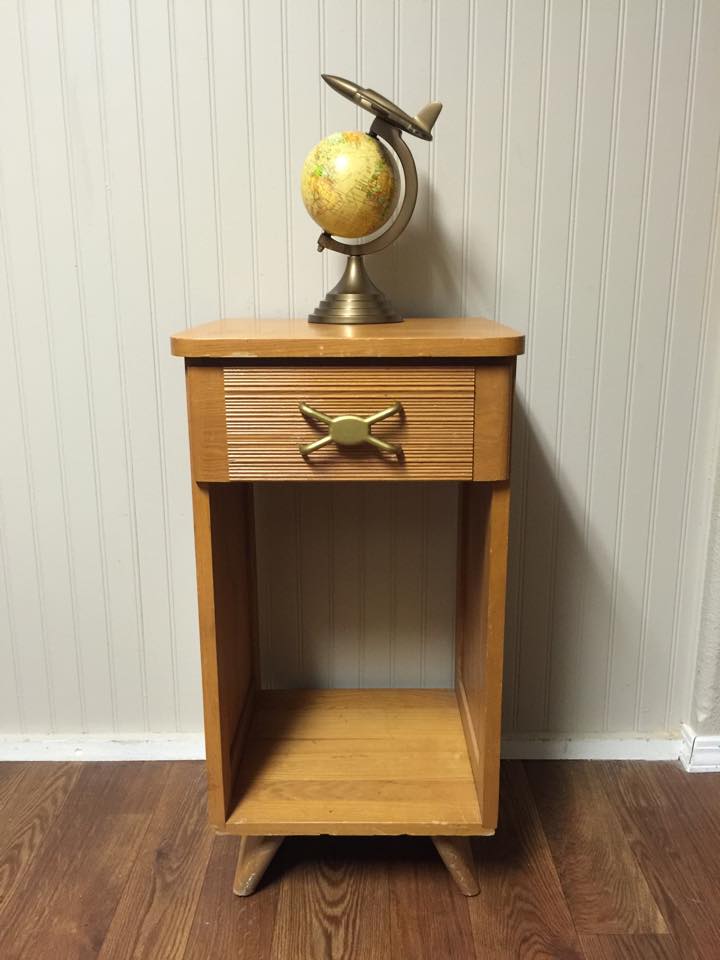
1TopToday I’m sharing a quick revamp I did on a side table with a bit of midcentury mod style.  Here’s how it looked when I spotted it on the buy/sell page.

Before

It was a good price for a solid wood piece and I knew I could give it a facelift with a quick coat of paint.  I had grey paint on hand from a previous project so I used that. I was pretty happy with how modern the new color made the piece look, even part way through painting!

during

Once everything was dry I switched out the futuristic drawer pull for a simpler knob.  I originally wanted to do a farmhouse style pull like we have on the drawers in the office, but since that would require drilling new holes I decided to stick with the single attachment option.  I also added a basket for more storage space.  It’s the perfect size for magazines or a throw blanket which makes the piece very functional in a multitude of spaces.

Finished

I originally planned to use this piece as part of a desk in the foster room but changed my mind as the room came together, so for now it’s acting as a nightstand in the guest room.

Z

I paid $30 for the table and around $20 for the basket, so the total cost came in just under $50.  Not bad for a quick little project.  I’m currently on the hunt for a small dresser for the guest room so when I find one this piece may find a new home elsewhere in the house.  I could see it working well as a side table in the family room as well.  But if not it should be an easy piece to sell.

I’d love to hear what you think of the transformation!  Leave me a comment below about how you’d use it in your home if you had the chance.

Board & Batten in the Laundry Room

bWhile we were putting up the shiplap wall in the dining room, we also installed a board and batten treatment in the laundry room.  The last time you guys saw the laundry room it was looking like this.  We put up this small coat rack shortly after moving in so our coats didn’t end up draped across the dining room table chairs and island bar stools.  It was functional, but the short width of the rack meant things bulked up in the middle and started to intrude on the walkway.

3

Here’s what it looks like now.  With spaced out hooks it’s easier to organize the coats we use daily and they lay flatter against the wall making the space less crowded.

a

The process to get this look was minimal and fairly low cost.  We already had the paint on hand, the hooks were purchased with a coupon and the boards were cut down from a single sheet of plywood.  We started by nailing up a header board at the same height as the old coat rack.

1

Next we added the vertical boards to create the panels.  We had to piece together a few of the verticals, but since those spots end up behind the door I wasn’t too concerned about it.  We also removed the handle pad on the wall since one of the vertical boards now runs over part of where it was.

2

We spackled the nail holes and joints between boards so we’d have a smooth surface to paint.

3

It took several coats of paint to get everything covered, and I eventually painted the one trim section of the door casing on either side of the room so it tied in with the new wall treatment.

4

The final step was adding the hooks.  I found these on Amazon after seeing them used in a bathroom revamp on one of my favorite blogs.  They didn’t come with screws so the hubs picked up some at the hardware store that were close to the same finish.

c

I could have staged the space to make it look even more amazing, but I decided to keep it real for you.  The fact that the coats are hung and out of the way is enough to make me happy!

a

I plan to add some sort of artwork or décor on the wall above the top board, but I’ll hold out until I find, or DIY, the perfect pieces. Who knows, maybe I’ll find that this weekend at the local Vintage Market!  But even if I don’t it will be fun to look!  🙂

TDC Before and After

We’ve Got Shiplap!

14

The first project we tackled after getting back from Hawaii was adding faux shiplap to the dining room.  Although it was high on my wish list I didn’t have plans to get it done until later, but the perfect opportunity presented itself and we decided to make the most of it.

While on vacation I found a larger sideboard to replace the inefficient one we had and made arrangements for my awesome furniture refinisher to pick it up before we returned home.  The buffet we had sold so fast that I had to empty the entire contents on the dining room table, which left the wall empty for about 2 weeks.  Knowing this was a rare opportunity the hubs suggested we just knock it out so it would be done when the new buffet was ready.  I quickly agreed and we figured out what we needed.

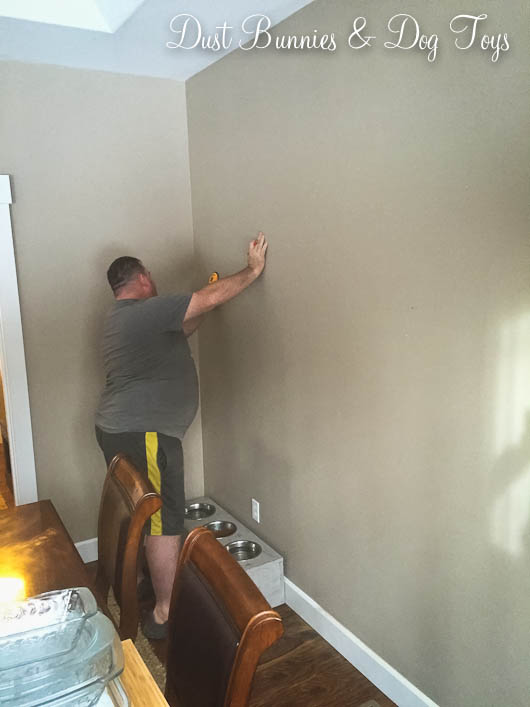
We started by locating the studs and marking their location the entire height of the wall so we’d know where to nail the boards in at.  Here’s my stud locating the wood studs.  I helped draw the lines and we recorded the measurement of each from either side of the wall so we’ll know where to anchor the windmill when it goes up later this spring.

1

3

2

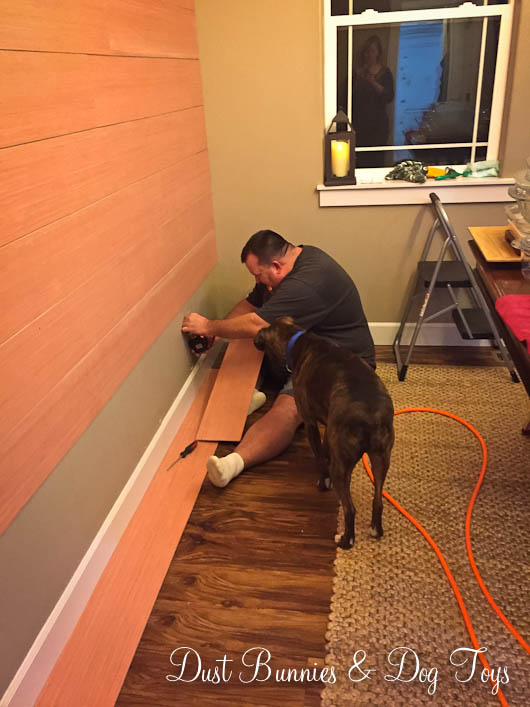
We purchased several sheets of 1/4″ hard oak plywood which we planned to have the box store cut into strips for us, but due to poor training the hubs was told they don’t do that.  So he brought the full sheets home and we ripped them into 8″ planks on our table saw.  Unfortunately, we didn’t notice that the back grip on the guide had come loose and most of our boards were not perfectly matched.  We divided them into piles by width so we could easily find similar sized boards as we added new pieces.  We started at the top and nailed the first board in along the stud marks.

4

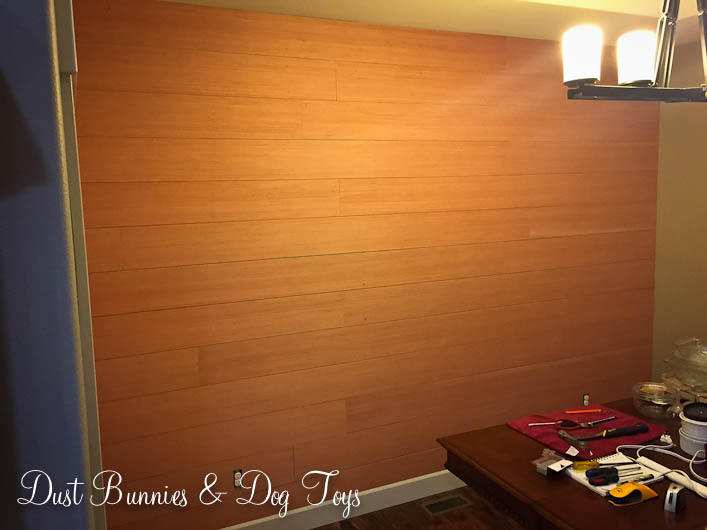
Once we had the top row done we used nickles to space out the second row.  Eventually we got tired of fussing with the nickles and just eyeballed the spacing, which worked out pretty well.  The process went pretty quickly and soon we were almost done.

5

6

7

Stoli was quite interested in the process and kept trying to figure out how he could help.  Eventually he decided that guarding dad while he was down on the floor was his best option. 🙂

8

9

The hubs had to cut around the two outlets at the bottom of the wall, which took some measuring but went smoothly.  Another row after that and we had the entire wall done.

10

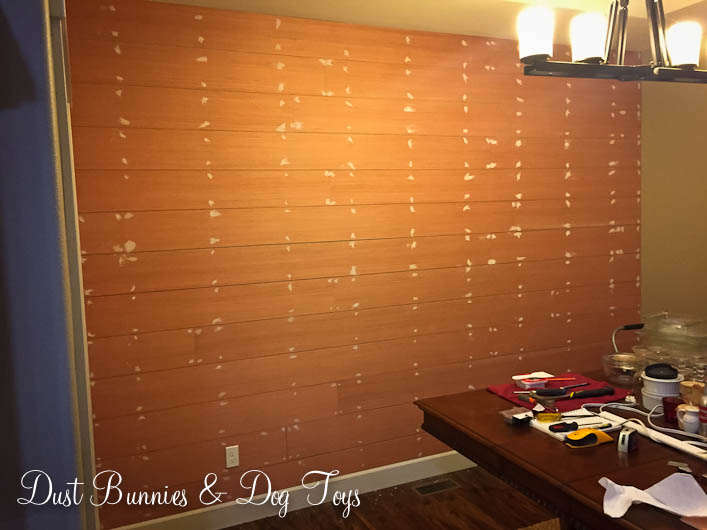
Next we spackled all of the nail holes, let them dry and then sanded them smooth.  Luckily we could find most in a line where the studs were but we had to find the additional nails were the boards joined going across.  We still missed one or two but I figure it adds a bit of character.

11

The wood had an orange, almost red tone so we knew it would take several coats to cover.  Here’s how things looked halfway through the first coat.

12

Another coat had countered the orange but there was still some bleed through so we opted for a third coat.

13

The bright white makes the entire space so much brighter and I love how it reflects the light from the windows in the dining room.  There were a few imperfections, but it fits our rustic style so I let them be.

14

The hubs wasn’t crazy about the idea of this project in the beginning but once it was done he stood back and said “Looks pretty good.  I like it.”  I’m glad he does because I LOVE it!  It makes me smile every time I walk in the room and see it. What’s even better is how it works with the new buffet which I’ll share in my next post!

TDC Before and After

It’s Curtains for the Foster Room

Before we left for Hawaii, we checked one final project off the list – installing a curtain rod in the Foster Room.  You may remember these green curtains from our Master some time ago, but when we replaced them with something new (seen in the background here) I stashed these away thinking they might somewhere else.  Looks like I was right.  To be honest they aren’t really curtains – they are actually table cloths, as are the new curtains in our room.  I prefer to use table cloths because they are less expensive, typically dirt & moisture resistant and come in long lengths to fit our high ceilings.  Plus they are washer friendly so I can take them down and run them on the sanitary cycle to help combat my severe allergies.

RoomFull

The curtain rod is more industrial pipe just like what we used on the bed and other projects such as this, this and this.   We’ve found that this is best option for window treatments in our house since the dogs and cat like to play in the fabric occasionally and kept ripping the screw mounted brackets of traditional curtain rods out of the wall.

Curtains

The hubs put the pipe pieces together with a 90* elbow on each end to give a bit of depth and made sure to put the curtain rings on before mounting – that’s a key step in this style of rod since it’s more permanent.  Luckily the ring clips add a little extra length to the overall effect and making taking the curtain down or switching them out super easy.  Here’s a closer view of the pipe and ring clips.

CurtainsClose

Now we just need to install a closet system and finish up this side of the room.  I’m on the hunt for a small dresser for the left side of the bed since the side table I picked up and revamped isn’t working out the way I planned it.  I’ll share that project soon as well.  The closet is next to that space on the right of the bed where the stools currently are.  I’m planning a fold down desk in that spot, which can also be a chalkboard!  Someone gave us a second twin mattress for the trundle under the industrial cart bed, which was a little thicker than we planned for so we’ll have to adapt the trundle frame to fit a bit more clearance.

Bed

The fabric you see at the bottom is the thin blanket currently protecting the sheets from the bed frame.  Although it works, the color isn’t right for this space so I’ll swap it out for something else when it’s all finished.  I think we already have a blanket that will work, but I’ve got to test it out before I commit it to this purpose.  Luckily having a blanket on the trundle eliminates the need for a bed skirt so it serves two purposes, and you know how much I love things that pull double duty!  The two standard pillows against the wall work for the main bed and trundle while the king pillow in front is an extra in case there are friends who stay over with a sleeping bag.  I plan to let the children who stay with us pick out throw pillows to add to the bed so they can show off their personality and interests a bit, then have something they can take with them when they leave our home.

I’m loving how this room is coming together and the fun industrial vibe it’s developing.  I’m hoping to have it wrapped up in the next month so we can start the final preparations to become foster parents.  It’s going to be a big change but I’m sure it will also bring big rewards for both us and those who’s lives we’re about to be a part of.

Storage in the Foster Room

CratesFront

As promised, today I’m sharing what’s underneath the art display boards in the Foster Room that I showed you yesterday.  I created a fun storage cubby system with simple wooden crates which can hold books and toys.  I got the idea from one of my favorite blogs and originally planned to mount the crates on the wall like she did, but wanted the option to use them occasionally as props for photo sessions occasionally so instead I opted to just stack them on the floor.

Crates

I was a little worried that the baseboard would make the bottom row stick out more than the top row and leaving a small gap behind the crates would make them unsteady which could be a safety issue around children but when I set them up they felt pretty sturdy. I figured only going two rows high keeps things at kiddo level so there’s no need to reach or lean on them and keeps the center of gravity on he whole group low so I’m not worried about it.

Wall

It coordinates with the art display boards well and is just as flexible since we can change up what’s in each cubby to fit each child’s interests.  There is also a digital frame in the lower left crate where we can load pictures of things that they like, which should be a fun project to do together when they arrive to get to know them and serve a dual purpose as a nightlight.   The wide openings are perfect for storing books and the toys I’ve started collecting such as the adorable elephant a co-worker knitted and one I found on Etsy years ago.

CratesPhants

I also ordered this peg doll set which should be interesting for a wide range of ages.  Since we don’t know who will be placed with us I got both the boy and girl sets which can be played with separately or paired up.  The cute purple crab in the back is something from my days working at the YMCA that I’ve kept.  I thought it was something fun a child might like and since it’s made of Styrofoam it shouldn’t be dangerous for them to play with.

CratesPeg

Next to the crates I put some mega blocks in a basket for easy access and clean-up.  I found a large bag of them on the local buy/sell page for a few dollars and likes that they are larger so they won’t be a choking hazard for smaller children.  Next to that is a bean bag I used to use for newborn sessions before I got my professional poser pillow.  I think it makes a fun little reading spot right next to the book storage.

WallFull

Since I bought the crates on sale and with coupons good for a percentage off a single item, gathering enough to make the cubbies required several trips to Michaels but it was worth the savings – especially since I go there often for my day job and can make a separate personal purchase while there! I used stain I had left over from the Moose Mount Board in the guest room for both the display boards and the crates so that was an additional savings.  Next up are the window treatments, which I’ll share tomorrow!

Foster Room Art Wall

I’m still sorting through Hawaii photos and collecting my thoughts so I can share all the things we did with tips for those who are planning trips which I’ll share in several posts next week.  Until then, I thought I’d give you an update on some of the projects we completed in the Foster Room before our trip.  One I really like are these simple art display boards.

BoardsFront

I needed something to fill the large empty wall, but also wanted it to be changeable with the seasons and each child’s interests without costing a lot so when I saw this idea on one of my favorite blogs I knew it was the perfect answer.  It was such a simple project that I did it all while watching TV and didn’t take any photos of the steps, but here’s the quick run down:

  1. Stain or paint pre-cut boards with favorite color.
  2. Screw in eye bolts at each end of the board.
  3. Loop gauged wire through the eye bolt and twist back on itself a few times.
  4. Pull wire taunt across the board to the other eye bolt and cut to appropriate length.
  5. Loop other end of wire through second eye bolt and twist it back on itself a few times.
  6. Adjust wire and eye bolts as needed to make wire tight. (I used pliers to tilt the eye bolts outward a bit for some extra tension.)
  7. Add small metal clips to the wire for hanging art.

Boards2

It’s the perfect simple solution and it can double as a spot to display little artworks to be oohh’ed and ahhhh’ed over.  For now I put up some simple dog and cat art I found online as placeholders.  I think the total cost came in under $30 and I have a third left over board stained and ready to be used for another project.

Boards

Tomorrow I’ll show you what we set up below these boards for more display and storage space so check back for that!